
Prison Treats Cancer Like a Death Penalty, Not a Disease

Share
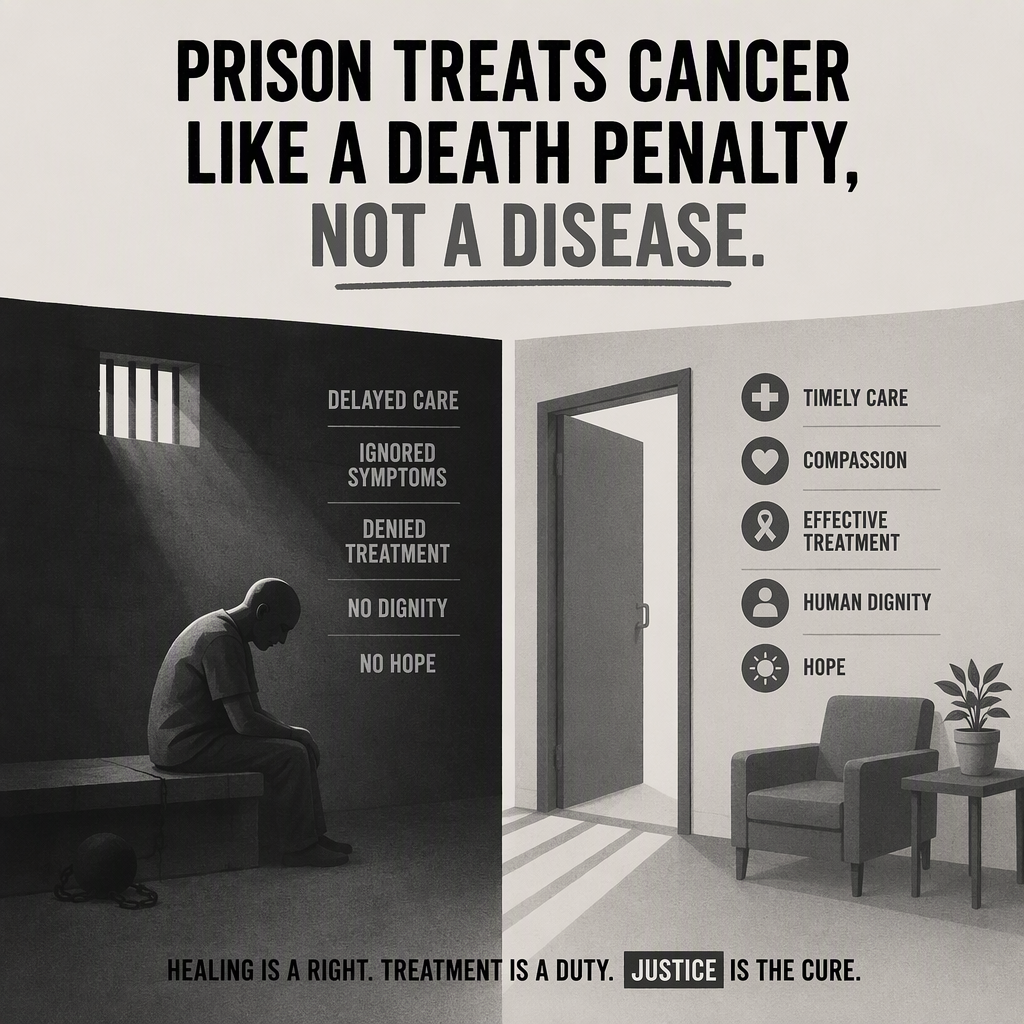
AI-generated illustration (the story is real, the picture isn’t)
👀 Cruel by Design
Prisons are treating cancer patients like they’re serving a second sentence, this time of slow medical neglect. If you’re Black and reading this, you already know who’s most likely to suffer under that cruelty: us. This is not about health care oversight, it’s about dehumanization as policy, and it targets the most vulnerable by design.
⚡ Sickness as Sentencing
When the state locks you up, it claims custody over your body. But what happens when that body gets sick, when it needs care? If you’re Black and incarcerated, let’s not pretend the answer is anything but contempt and neglect. Prison doesn’t treat illness; it weaponizes it. And cancer is no exception. For too many people behind bars, a diagnosis isn’t a medical condition to treat, it’s a death sentence dressed up as bureaucracy.
Look at the numbers: incarcerated people are 3 to 5 times more likely to get cancer than those on the outside. Think about what that says. These are environments where people are poisoned by asbestos, mold, and contaminated water. Where access to basic hygiene and nutrition is a privilege, not a right. Where untreated chronic stress, the kind that compounds in a system designed to break your spirit, chips away at your immune system. Then, when cancer shows up, the system does what it does best: dehumanizes, delays, and denies.
Prison healthcare is already a bad joke. We hear stories of folks waiting weeks for a Tylenol or getting charged for a doctor visit they didn’t even have. Now imagine navigating that chaos with something as aggressive as cancer. That means waiting months for an appointment, if you’re lucky. ” That means guards deciding whether your pain warrants a trip to the hospital. Imagine begging for care while the state debates whether you deserve it. And let’s not act like race doesn’t shape this cruelty. Black folks already get dismissed, ignored, and misdiagnosed in civilian healthcare; now add incarceration to the mix. Behind bars, the message is clear: you’re less than human, and your suffering is just background noise.
Of course, this isn’t just about individual prisons failing to do their job. This is about a system built on punishment, not care. The prison industrial complex thrives on the idea that incarcerated people are disposable. Its goal isn’t rehabilitation or justice, it’s control.
Look at the numbers: incarcerated people are 3 to 5 times more likely to get cancer than those on the outside. Think about what that says. These are environments where people are poisoned by asbestos, mold, and contaminated water.
And what better way to exert control than to decide who gets to live or die? Denying medical care is just another form of violence. Another way to strip away dignity. Another way to remind people that their lives don’t matter to the state.
We can’t ignore the ripple effects either. When someone dies of untreated cancer in prison, their family feels it. Their community feels it. Black communities are already grappling with generational trauma from over-policing and mass incarceration, and now we’re supposed to accept that sickness and death behind bars are just part of the deal? No. Prison doesn’t just harm the incarcerated; it harms everyone who loves them. It hollows out families, it robs children of parents, it deepens the wound.
So what do we do with this? First, we stop pretending prison is anything but a machine built to grind us down. We demand accountability for the medical neglect killing people inside. Push for independent oversight of prison healthcare. Advocate for compassionate release policies so people don’t have to spend their last days chained to a hospital bed. And bigger than all that, we organize to dismantle the system itself. Because no amount of reform will fix a structure designed to crush us.
We have to center the humanity of the people impacted. Talk about their lives, their dreams, their families, not just their pain. This isn’t just a story about disease; it’s a story about dignity. And let’s be clear: dignity doesn’t end where the prison walls begin. If we let the state decide who gets treated and who gets left to die, we’re complicit in its violence. Cancer doesn’t discriminate, but this system does. Let’s not give it permission.
😏 Cruelty Hits Stage IV
Apparently, tumors are now co-defendants. The prison-industrial complex found a way to weaponize sickness itself, because regular punishment wasn’t vicious enough.
⚡ Health Justice Behind Bars
Black people are disproportionately incarcerated and more likely to experience medical neglect behind bars, turning a diagnosis into a death sentence for many.