



Ivan McClellan’s new book puts Black cowboys back where they belong: the center

Share
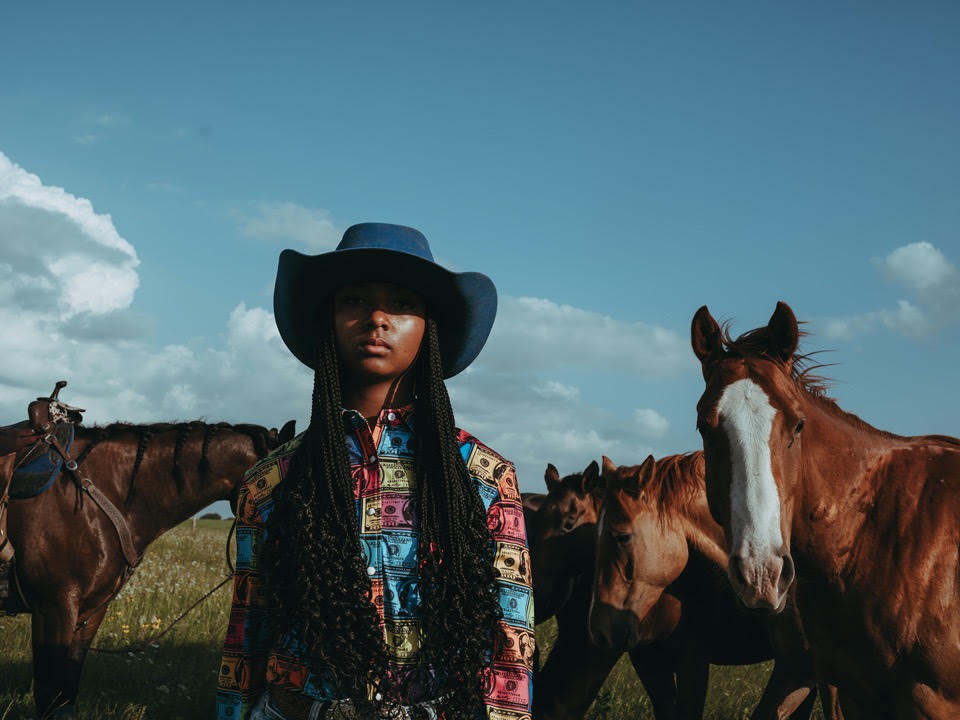
© theblackwallsttimes.com
🌟 Reclaiming the Saddle
Black cowboys are not a footnote, they’re the headline of American West history. Ivan McClellan’s new book reins in a narrative that whitewashed the frontier and gallops straight into reclaiming cultural legacy. I say you this: if the West was won, Black folks were doing the heavy lifting.
🤠 Rewriting the Wild West
” If it’s some John Wayne knockoff, white hat, denim for days, and an almost laughably stoic gaze into the horizon, you’re not alone. Hollywood and textbooks have been running a decades-long PR campaign for white cowboys as the face of the West. But that image? It’s as fabricated as a rhinestone belt buckle. Ivan McClellan’s new book is here to remind us who was really galloping across the plains, who was herding cattle, breaking horses, and keeping this country fed. Black cowboys were a footnote in written Western history; while at the heart of the story. And the fact that many of us have to unlearn the lie says everything about whose history gets to be told, and whose gets erased.
McClellan’s work does more than document Black cowboys, it centers them. That’s important. It’s not just about filling in the gaps of history, it’s about restoring Black people to the narrative where we always belonged. Because let’s be clear, the American West wasn’t built by rugged loners. It was built by communities. Black folks were there, building towns, creating families, and developing economies, even while dealing with stolen land, hostile neighbors, and laws designed to keep them from prospering. The cowboy life wasn’t a romantic escape; it was work, survival, and skill. Black cowboys mastered all three, but you wouldn’t know it from the stories America decided to tell.
This erasure isn’t accidental. It’s systemic. The myth of the white cowboy doesn’t just stroke America’s ego about its pioneer days, it props up whiteness as the default of who gets to represent rugged individualism, freedom, and masculinity. This is the same system that turned Black inventors into trivia, Black cities into cautionary tales, and Black athletes into commodities. It decides what’s iconic and who’s invisible. That’s why a Black cowboy might feel like a revelation, even though one in four cowboys during the late 1800s was Black. That’s why rodeo culture’s roots can feel distant, even though Black cowboys have been competing in them since day one.
What McClellan’s book does is what every good reclamation of history should do: it reminds us that our people have always been there, creating and thriving, even when the spotlight didn’t want to find us.
Black cowboys were a footnote in written Western history; while at the heart of the story.
And if we’re honest, this isn’t just about the past. Black cowboys still exist. They’re still riding, still roping, still raising families and passing down traditions. The rodeos are still happening. The land is still being cared for. That’s the thing about Black life, it persists, even when the narrative pretends it doesn’t.
So what does this mean for us, for our community? First, it means we need to stop letting anyone else define who we are. Whether it’s cowboys, inventors, entrepreneurs, or artists, our stories are ours to tell. And when we tell them, we tell the truth: not just about how Black folks have survived, but how we’ve thrived, contributed, and led. Second, it means questioning the systems that decide whose history matters. If Black cowboys have been written out, who else has? And finally, it’s about seeing ourselves in every space. Too many of us still think of the West, or the frontier, or even just the outdoors, as something separate from us. McClellan’s book is saying: look again. We’ve always been here. We’re not the exception; we’re the rule.
McClellan’s work isn’t just a book. It’s a corrective lens. It’s a reminder that America can’t tell its full story without us in the center of it. So let’s ride with it. Let’s tell our own stories, claim our own spaces, and make sure they can never erase us again. ✊🏾
📌 Myth Busted 🤠
Turns out the ‘Wild West’ was less Marlboro Man and more Melanin Rodeo, McClellan’s book flips the script on cowboy mythology with boots full of receipts.
🏗️ Restoring Our Legacy
Black cowboys aren’t just a forgotten chapter of history, they’re a living rebuttal to whitewashed myths about the American frontier. Reclaiming their stories is about more than representation, it’s about restoring economic and cultural legacy to our communities. A narrative that erases us erases our stake in the land, the labor, and the freedom to define ourselves.


