
People are saying 28% fewer words a day, but nobody knows why.

Share
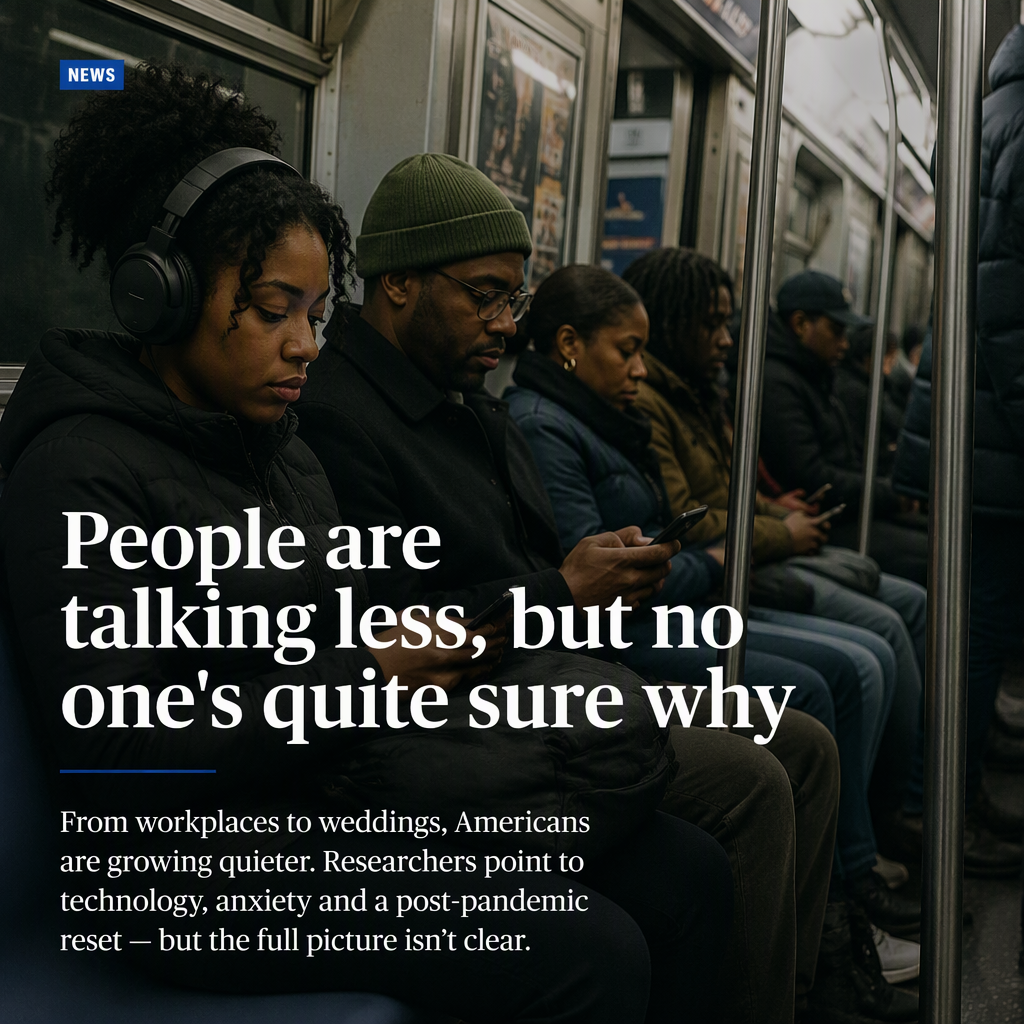
AI-generated illustration (the story is real, the picture isn’t)
🧾 Silence for Sale
Apparently, silence is trending, but the real mystery is whether we’re running out of words or just patience.
🎲 Quiet on the Board
So, people are talking less. A lot less. Twenty-eight percent fewer words per day since 2005. That’s a whole chunk of conversation just missing. And nobody’s sure why. It’s tempting to chalk it up to the usual suspects, social media, smartphones, the death of the dinner table. But can we really act surprised? The tools we use to connect are the same ones that are muffling us.
Here’s where I’m at with this. First off, I don’t fully buy that researchers are scratching their heads over this drop-off. I don’t need a million-dollar grant to tell you what’s changed over the last 20 years: life got louder and lonelier. Every app notification, every algorithm grabbing your attention, every crisis on the news demanding your outrage, all of it’s been taking up space where actual dialogue used to live. What’s wild is that back in 2005, Dr. Mehl was strapping listening devices on folks to measure who talked more, women or men. Now, the bigger question isn’t who’s talking more. It’s why are we all talking less, and what does that say about where society’s headed?
Think about the ripple effects of this. Words aren’t just words. For us, they’ve been survival tools. You don’t just talk to fill air; you talk to build connections, share stories, pass down knowledge, hash things out. When we lose words, we lose community. We lose problem-solving. We lose memory. You can’t tell me this silence doesn’t have a deeper impact on Black folks specifically.
Words aren’t just words. For us, they’ve been survival tools. You don’t just talk to fill air; you talk to build connections, share stories, pass down knowledge, hash things out. When we lose words, we lose community. We lose problem-solving. We lose memory.
Our culture is rooted in oral traditions, the way we’ve always talked our way through the mess this world throws at us. From griots in West Africa to Black church testimonies to the unfiltered kitchen-table debates that raise generations, words have never been disposable.
But let’s be real about the reasons people might be clamming up now. It’s exhausting out here. The grind culture, the surveillance, the “always-on” mentality, it’s like the world’s been designed to keep us too tired, too busy, or too self-conscious to just talk freely. And don’t underestimate the role of distrust. In a time when every conversation feels like it could be clipped and weaponized online, folks are more careful. You can’t even play backgammon without somebody accusing you of cheating, or worse, recording the whole thing for TikTok.
So what does this mean for us, for our community? If people are speaking less, they’re listening less too. And if they’re listening less, they’re learning less. That hits us harder. Because while the mainstream can afford to lose nuance, we can’t. Our stories have always needed room to breathe. Our experiences don’t fit into soundbites or tweets. And shrinking conversations means shrinking opportunities to be seen fully.
We have to protect the spaces where we can still talk freely, really talk, not text or scroll or react with an emoji. It’s bigger than barbershops and brunches; it’s about creating intentional places where words carry their original weight. And maybe we need to push back on the systems that keep us quiet. Talk slower. Ask deeper questions. Don’t let the world trick you into thinking the silence is your choice. Because for us, silence is survival’s enemy.
🔎 Who Gains From Quiet?
A 28% drop in daily words sounds less like a mystery and more like a survival mechanism in a world where speech can be weaponized, surveilled, or commodified. When ‘say less’ becomes both cultural wisdom and economic necessity, you know people are reading the room and the receipts.
💡 Silence Fuels Exploitation
If fewer words are being spoken, who controls the language we consume instead? This could be the quiet force of tech platforms dictating our conversations, habits, and even thoughts while sidelining voices from Black and marginalized communities. Silence isn’t neutral when power is listening.